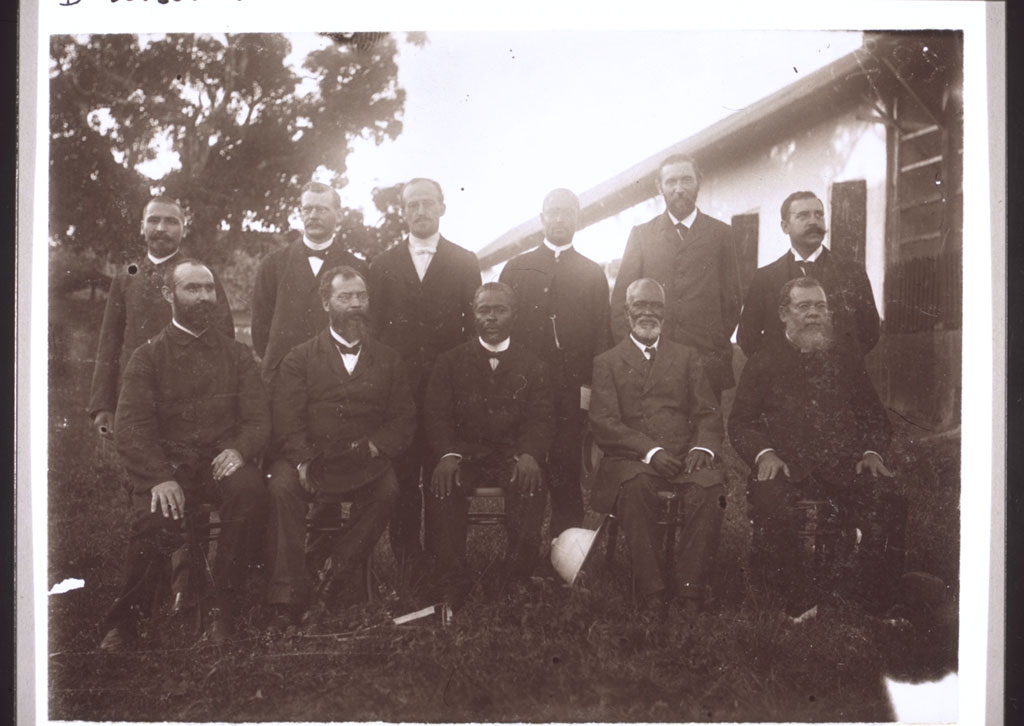
“Big things have small beginnings”; so is The Presbyterian Church of Ghana. The First Missionaries were sent as a result of a request by Major de Richelieu, Governor of Christiansborg.
The governor had observed the bad moral life of the Europeans in the fort. His request to the Danish Crown for missionaries was forwarded to the Basel Mission which had been set up in 1815 to train missionaries.Unfortunatly the first four missionaries died within a period of three years of arrival.
The Basel Mission sent another team of three missionaries: Andreas Riis, 28years, Peter Petersen Jaeger, 24 years, and a doctor, Christian Friedrich Heinze, 28years. Unfortunately Dr. Heinze and P.P. Jaeger failed to survive after three months, leaving Andreas Riis alone.
Riis later moved to Akropong in order to be away from the problems of the coast; malaria fever, negative examples of the Europeans along the coast, and to preach the gospel to a people who were not yet greatly affected by the contact with the Europeans.
He was joined in November 1837 at Akropong by two more missionaries, Johannes Murdter and Andreas Stanger who came together with Anna Wolters, the bride of Riis.
Stanger died in December 1837 while Murdter survived until November 1838.
The time in Akropong was not altogether very successful causing Andreas and Anna Riis to leave Akropong in 1840 for Europe.
The Presbyterian Training College was started in 1848 and played a key role in the expansion and growth of the church.
New colleges were founded at Aburi and Abetifi. The first clinic was at Aburi followed by the hospital at Agogo. Today we have hospitals at Donkorkrom, Bawku, Dormaa Ahenkro, Enchi, and health centres in many other places.
Other areas of endeavour of the church were in the development of the vernacular, development of roads, commerce, etc. The development of the vernacular was in keeping with the Basel Mission policy of ministering to the people in their indigenous language.
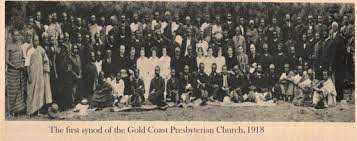
Following the departure of the Basel Missionaries from Ghana in 1918, the Scottish Mission was given the mandate to provide leadership for the church. Considering the size of the Church and the small staff of two missionaries of the Scottish Mission, it became necessary for more indigenous leaders to be drafted into the church’s national leadership.
cottish Mission through Dr. Wilkie took the significant step of organizing the church to become a self-governing Church.